Filecoin Network Health Weekly Reports are Live
The latest one in the collection of networks that ProbeLab is monitoring is Filecoin’s P2P network. Reports are published weekly at: https://probelab.io as of Q4’24.
Network Size, Stability & Demographics
ProbeLab’s Nebula crawler is crawling the Filecoin DHT network 84 times per week (i.e., every 2 hours) and produces several critical metrics. Below we’re listing some of the highlights we’ve seen during the last few weeks of producing these reports.
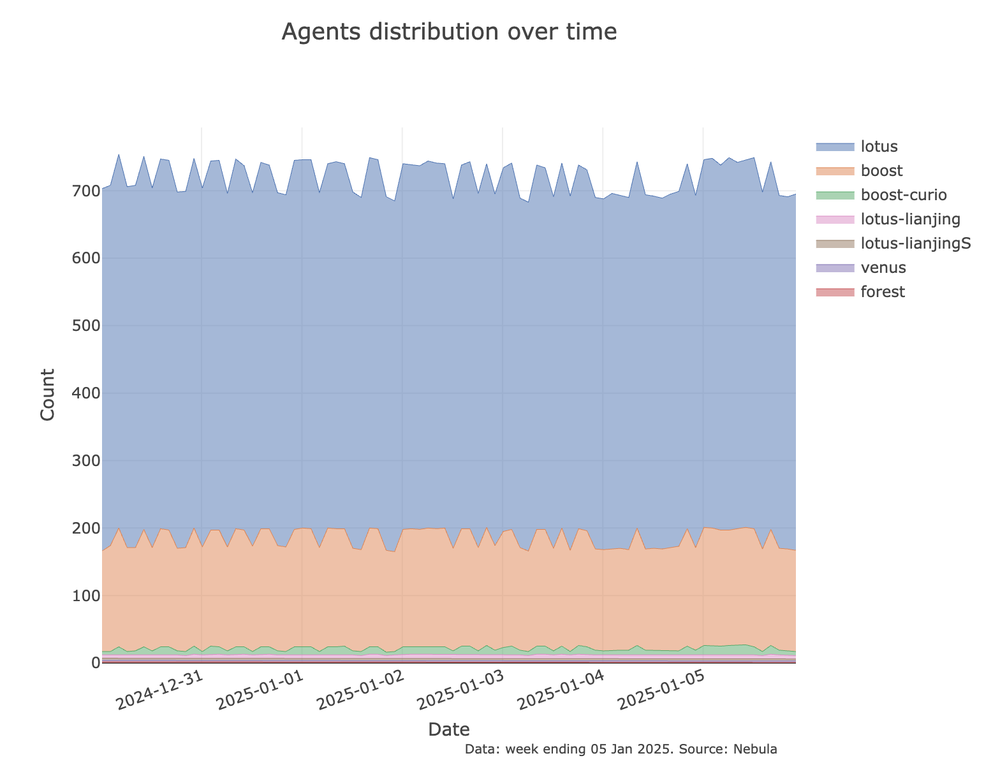
The network is generally very stable with close to 750 nodes in total, primarily split between Lotus (~540 nodes) and Boost (~170 nodes). The distribution over time is shown below (and here) and the percentage-split bar plot can be found here.
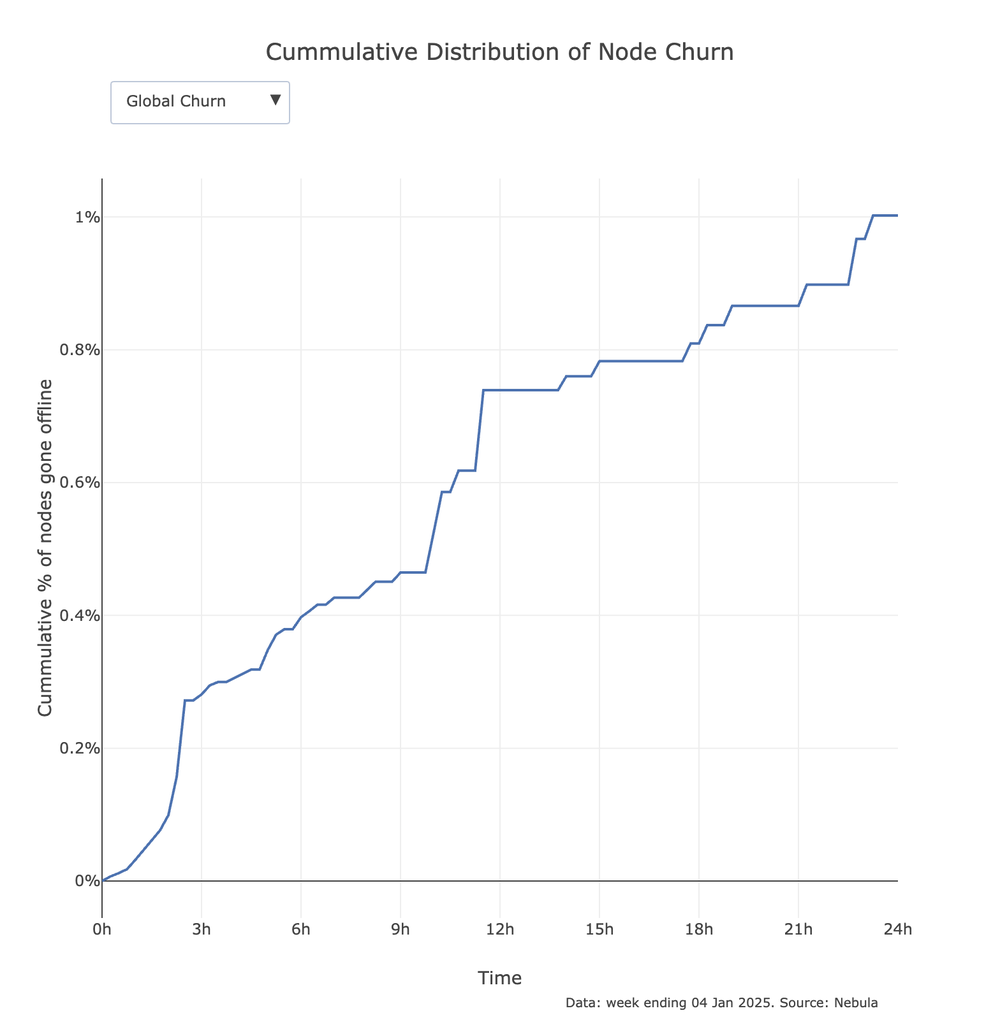
The nodes present remarkable stability in terms of churn rate with only around 1% expected to leave the network on a 24 hour cycle, at any given point throughout the week. For more details, check the description in this section.
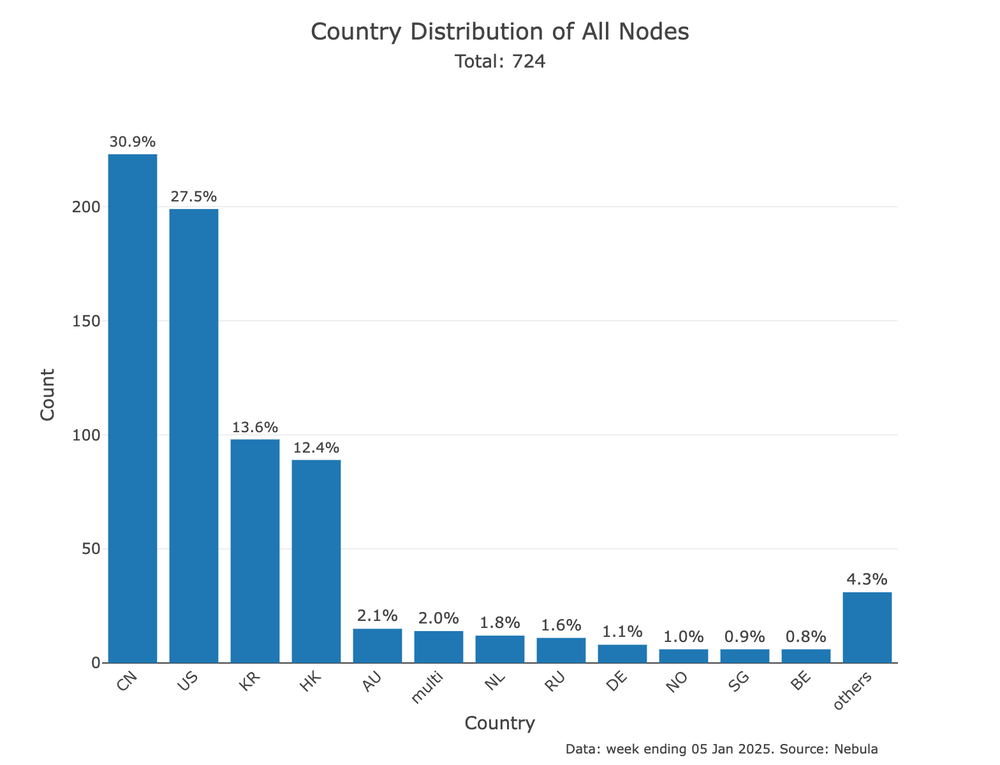
There is a fair distribution of nodes among countries, albeit with a tendency towards Asian territory: https://probelab.io/filecoin/dht/2025-01/#filecoin-geo-agent-all-bars-plot
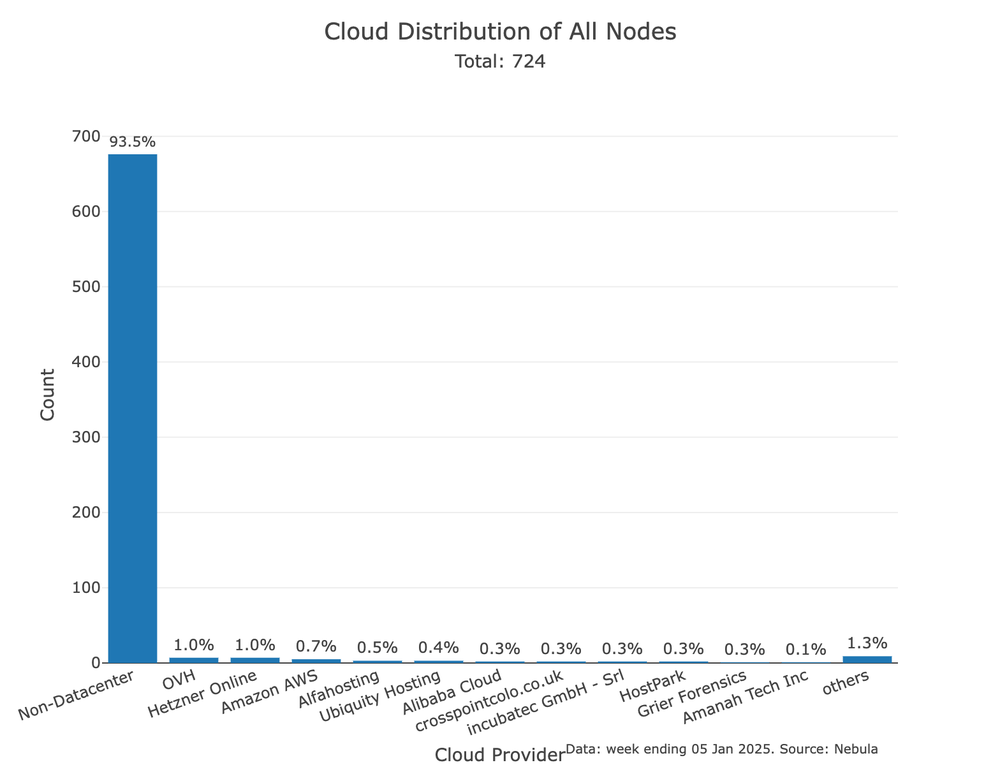
What is remarkable about the Filecoin network is that the vast majority of nodes are deployed on non-cloud, custom infrastructure with deployments on popular cloud providers, such as AWS, Hetzner, OVH and Alibaba having less than 1% representation each. More than 90% of nodes operate outside of centralised cloud infra, which is the biggest we have seen across networks we are monitoring: https://probelab.io/filecoin/dht/2025-01/#filecoin-cloud-rate-agent-all-lines-plot
Head over to: https://probelab.io to find out more about the set of protocols supported by Filecoin nodes, connection and crawl errors and several other metrics.
Network Resilience & Security
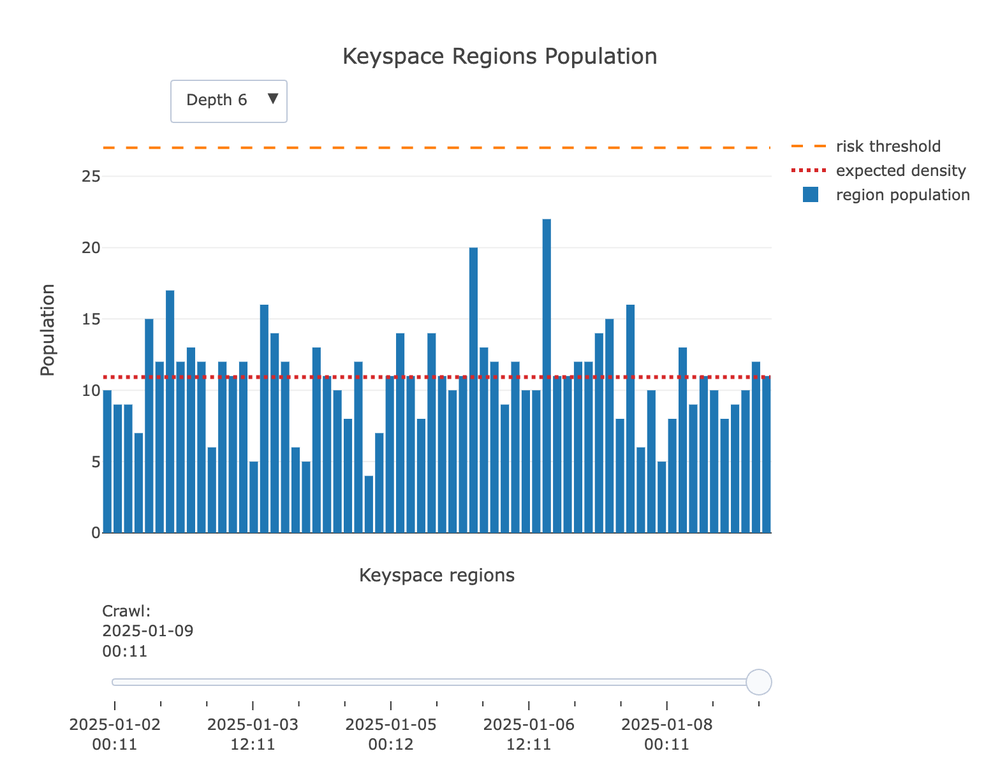
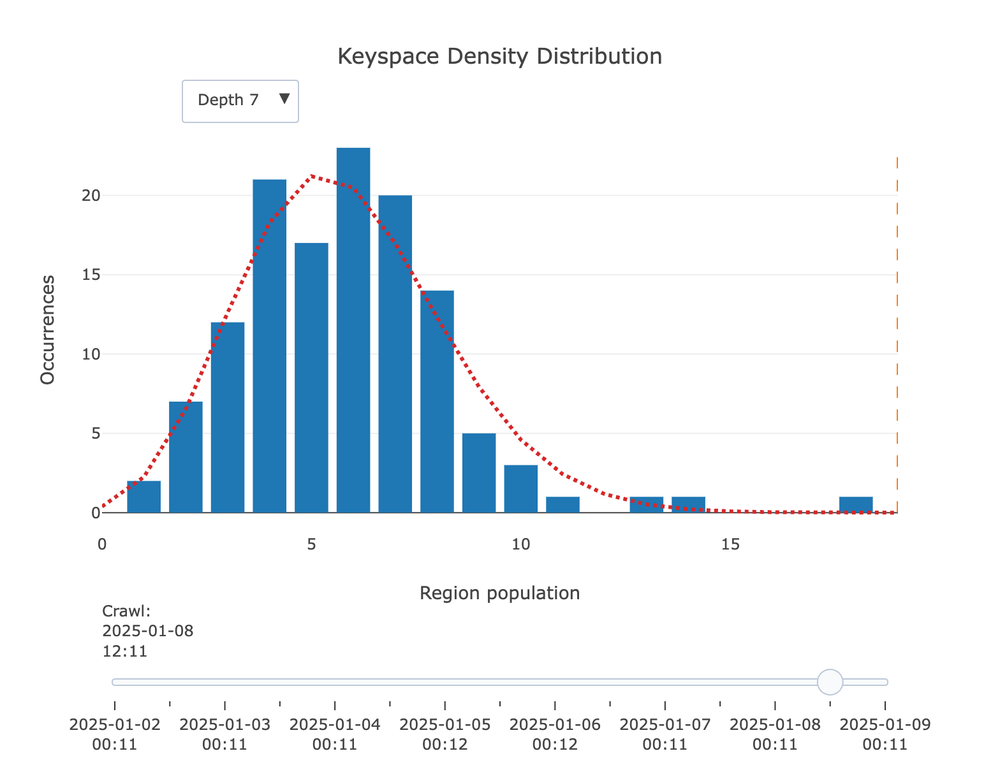
Although there are several aspects to network security when it comes to a DHT-based network, resilience against Sybil and Eclipse attacks is definitely one of the most central ones. We have built and deployed the right tooling to detect Eclipse attacks on the Filecoin DHT network.
Our tooling is monitoring the density of keys (i.e., PeerIDs) across the DHT keyspace and is throwing alerts when the density is going above a certain level that we consider dangerous.
Keyspace density results are presented as part of each weekly report [link to Week 1, 2025], but also separately under this link, where we present results of the last 7 days (up to the previous day). It is worth noting that although real-time results are not presented in the plot/website, our tooling is monitoring keyspace density in real time and will trigger alerts when needed.
Head over to https://probelab.io/filecoin/keydensity/ to play around with the interactive plots.
Reports are published weekly on Mondays at https://probelab.io, so make sure to follow along, or subscribe to receive updates: https://www.probelab.network/contact.
Related Posts

ProbeLab's 2025 Review and 2026 Outlook
What we've achieved in 2025 and what we're targeting in 2026

Optimistic Provide: How We Made IPFS Content Publishing 10x Faster
How a statistical approach cut IPFS content publishing times by over one order of magnitude.

Peering into Privacy: A Deep Dive into the Monero Network Topology
Mapping Monero's P2P network: 16,000 nodes, one dominant provider, and a lot of spy nodes.